CTET September 2026: Applications Extended, No Vacancy Count
Central Board of Secondary Education
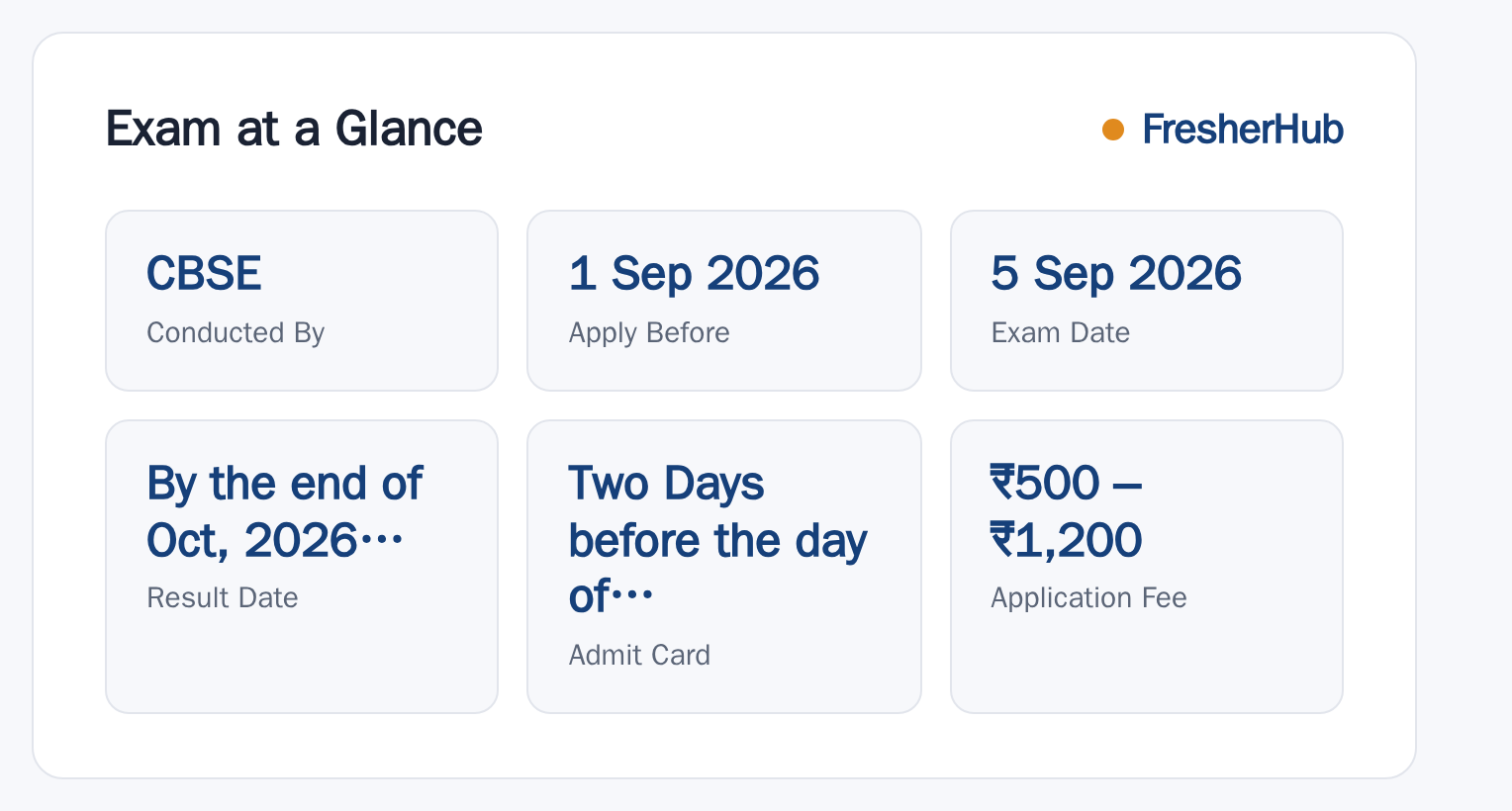
CTET September 2026 is a recruitment notified by Central Board of Secondary Education. Applications closed on 10 Jun 2026.
Key Details
- Application Dates: 11 May 2026 to 10 Jun 2026 Important Dates
- Exam Date: 06 Sept 2026 Important Dates
- Result Date: By the end of OCTOBER, 2026 (TENTATIVELY) Important Dates
- Application Fee: ₹500 to ₹1,200 depending on category Application Fee
Eligibility Criteria
- Educational Qualification: Candidates must possess the minimum educational qualifications for becoming a teacher for Classes I to V and/or Classes VI to VIII as notified by the National Council for Teacher Education and specified in the applicable recruitment rules. Eligibility
Selection, Pattern and Syllabus
- Selection Process: Paper-I (Central Teacher Eligibility Test) → Paper-II (Central Teacher Eligibility Test) Selection Process
- Exam Pattern: Paper-I, Paper-II — 10 sections in all Exam Pattern
- Negative Marking: There will be no negative marking. Exam Pattern
- Syllabus: 7 subjects — Child Development and Pedagogy, Mathematics, Environmental Studies, Language I, Language II, Mathematics and Science and 1 more Syllabus
About CTET September 2026
The Central Board of Secondary Education, Delhi, published the Information Bulletin for CTET September 2026.
CTET checks eligibility for teaching Classes I to V and Classes VI to VIII.
Current stage
The online application date was extended until 1 September 2026. Check your application status and prepare for the examination.
How the examination works
- Paper-I is for teaching Classes I to V.
- Paper-II is for teaching Classes VI to VIII.
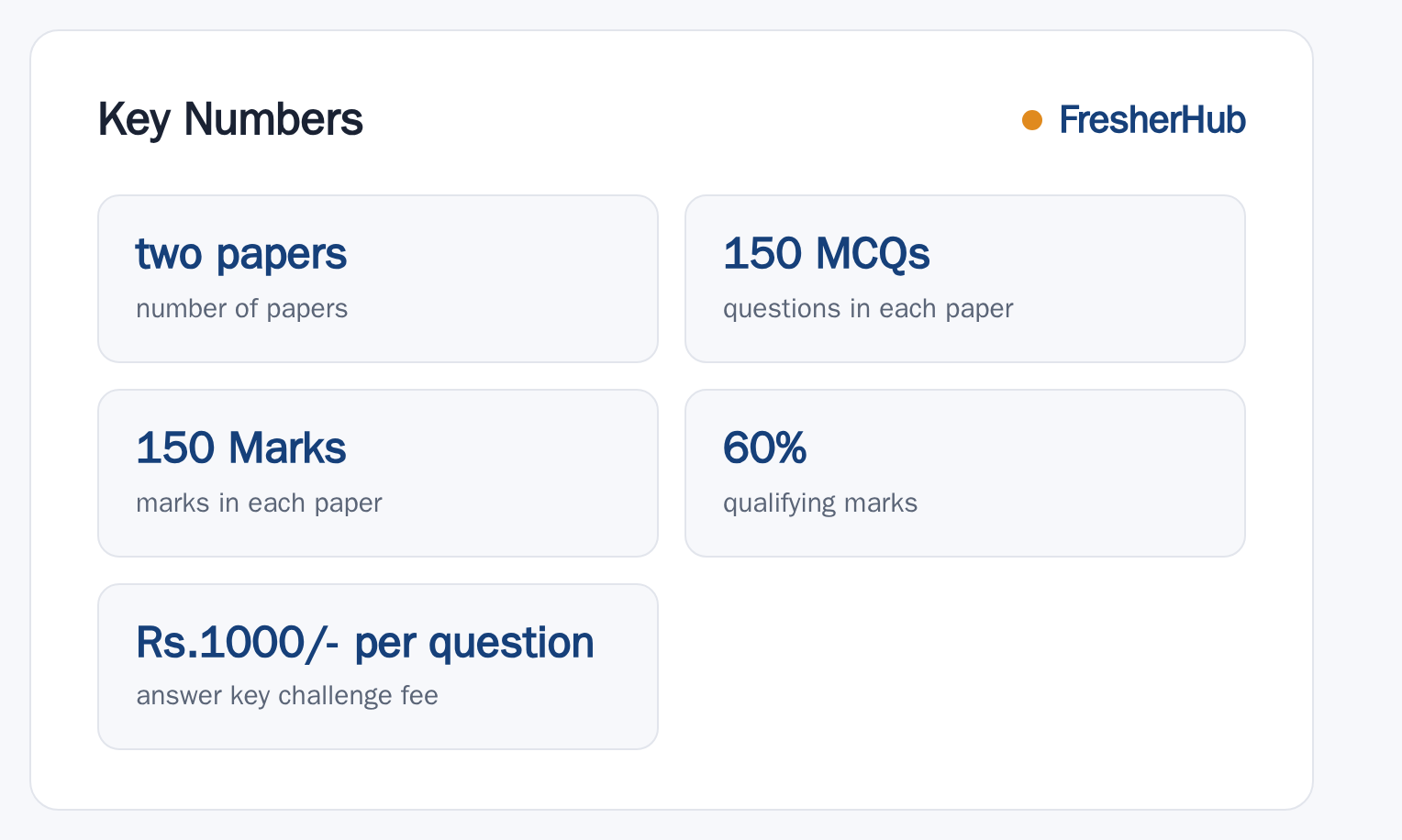
- Each paper has 150 multiple-choice questions.
- Each paper carries 150 marks.
- The qualifying mark is 60%.
- There is no negative marking.
- Eligible candidates with benchmark disabilities receive 50 minutes of compensatory time.
Paper-I subjects
| Subject | Questions | Marks |
|---|---|---|
| Child Development and Pedagogy | 30 | 30 |
| Mathematics | 30 | 30 |
| Environmental Studies | 30 | 30 |
| Language I | 30 | 30 |
| Language II | 30 | 30 |
Paper-II subjects
| Subject | Questions | Marks |
|---|---|---|
| Child Development and Pedagogy | 30 | 30 |
| Mathematics and Science | 60 | 60 |
| Social Studies/Social Science | 60 | 60 |
| Language I | 30 | 30 |
| Language II | 30 | 30 |
How to apply and prepare
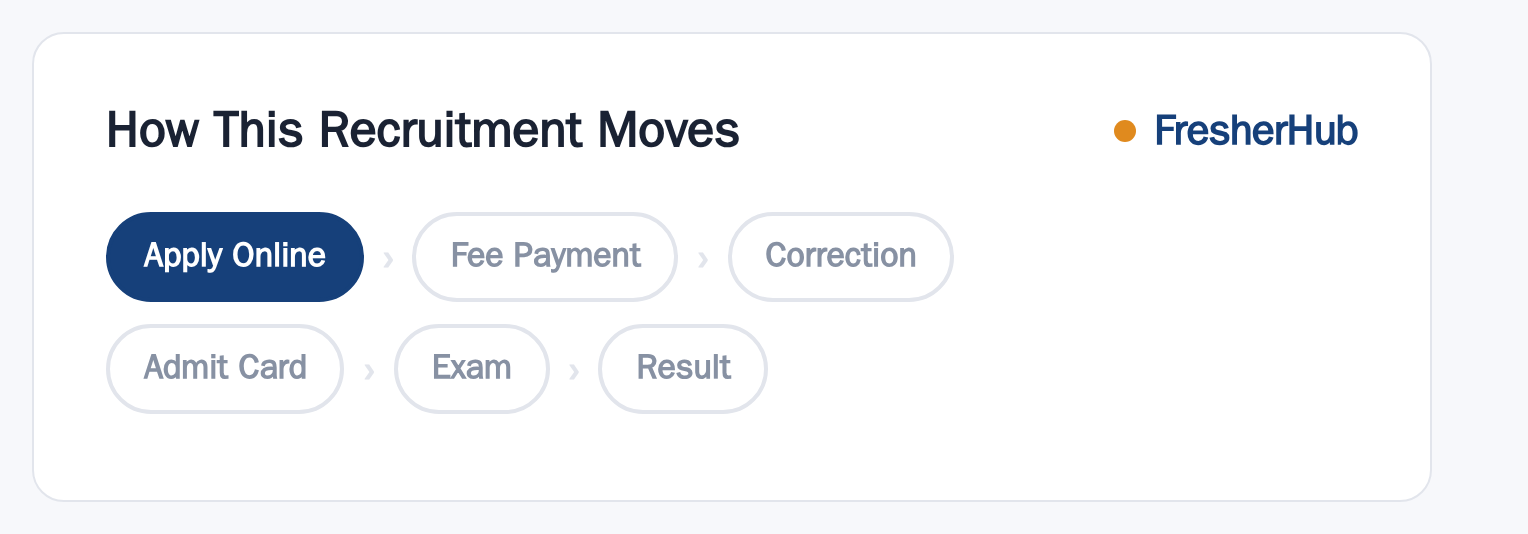
The application window started on 11 May 2026. The extended last date was 1 September 2026.
- Choose Paper-I, Paper-II, or both papers.
- Check the required education for your intended teaching classes.
- Pay the fee through Debit Card, Credit Card, or Net Banking.
- Check all uploaded details during the correction period.
- Download the admit card two days before the examination.
Prepare Child Development and Pedagogy, languages, and the subject areas for your selected paper.
In Detail
Vacancy Details
The provided data does not give a total vacancy count or a post-wise vacancy breakdown.
Important Dates
| Event | Date |
|---|---|
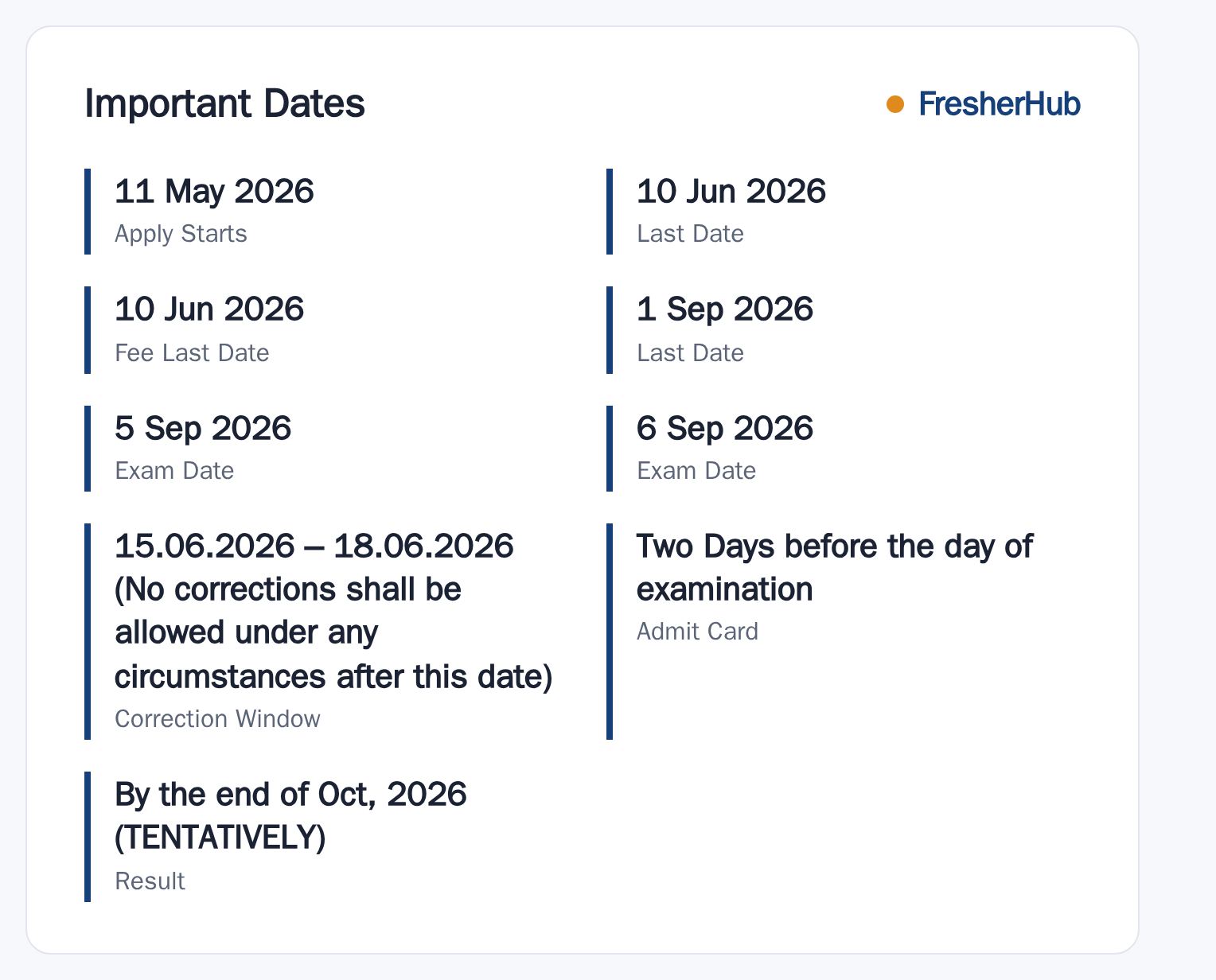
| Start of online application | 11.05.2026 |
| Last date for online application | 10.06.2026 up to 23:59 hrs |
| Last date to pay the fee | 10.06.2026 up to 23:59 hrs |
| Online correction period | 15.06.2026 to 18.06.2026 |
| Additional possible examination date | 05 September 2026 |
| Examination date | 06-09-2026, Sunday |
| Admit card | Two days before the examination |
| Result | By the end of October 2026, tentatively |
| Extended last date for online application | 01.09.2026 |
Every date Central Board of Secondary Education printed for CTET September 2026, exactly as the notification states it. A date the notice gave as a range or a month is shown in its own words rather than pinned to a day it never named.
| Event | Date |
|---|---|
| Start of submission of online application | 11 May 2026 |
| Last date for submission of online application form | 10 Jun 2026 |
| Last date for submission of fee through Debit/Credit Card/Net Banking | 10 Jun 2026 |
| Online corrections in the particulars uploaded by the candidate | 15.06.2026 to 18.06.2026 (No corrections shall be allowed under any circumstances after this date) |
| Date of Examination | 06 Sept 2026 |
| Additional possible examination date | 05 Sept 2026 |
| Download Admit Card | Two Days before the day of examination |
| Declaration of Result | By the end of OCTOBER, 2026 (TENTATIVELY) |
| Extended last date for online application | 01 Sept 2026 |
Application Fee
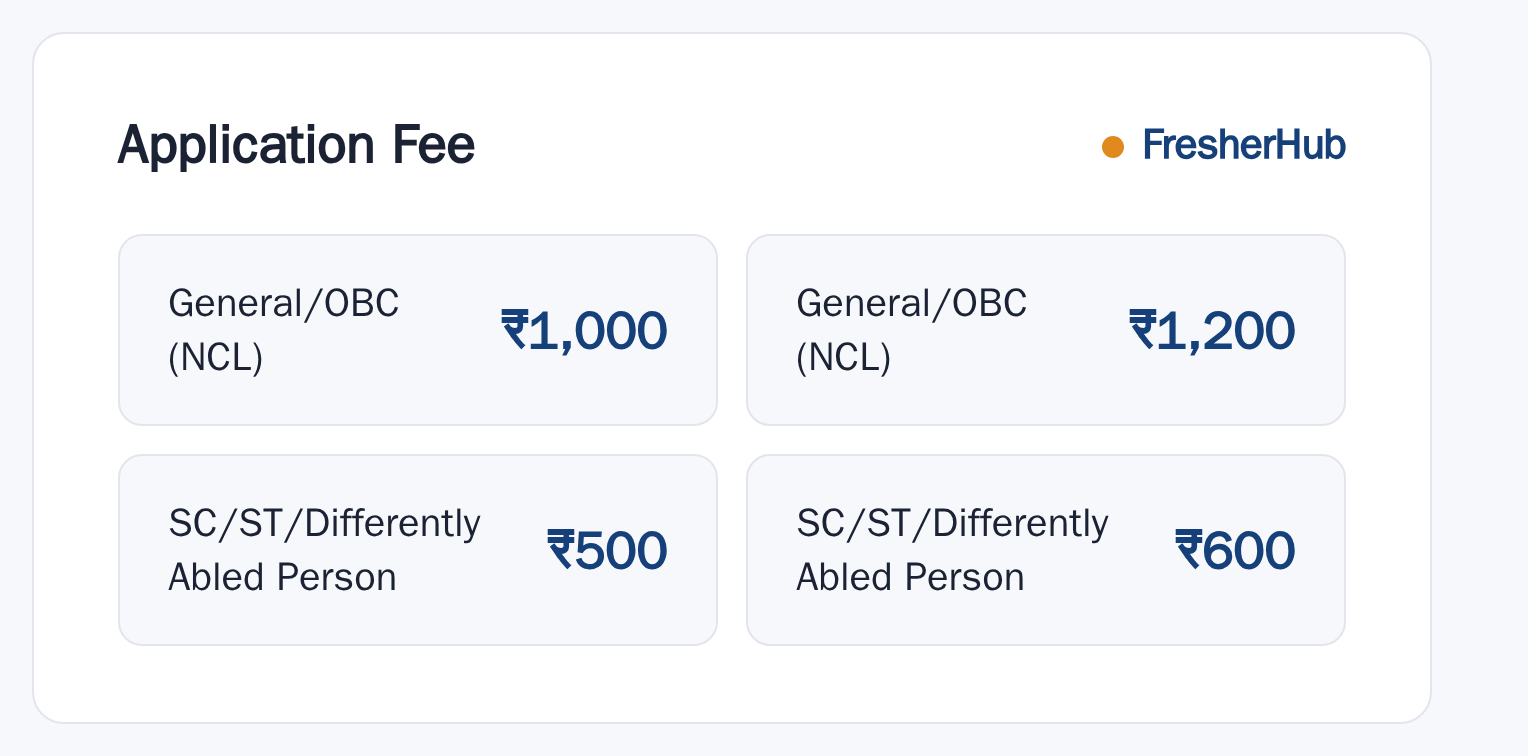
| Category | Paper choice | Fee |
|---|---|---|
| General/OBC (NCL) | Only Paper-I or Paper-II | Rs.1000 |
| General/OBC (NCL) | Both Paper-I and Paper-II | Rs.1200 |
| SC/ST/Differently Abled Person | Only Paper-I or Paper-II | Rs.500 |
| SC/ST/Differently Abled Person | Both Paper-I and Paper-II | Rs.600 |
NCL means Non-Creamy Layer. The fee was payable by Debit Card, Credit Card, or Net Banking.
Application fee for CTET September 2026 by category, as printed in the official notification. Pay it before the last date — an application whose fee has not reached the board is not a submitted application.
| Category | Fee | Note |
|---|---|---|
| General/OBC (NCL) | ₹1,000 | Only Paper-I or II |
| General/OBC (NCL) | ₹1,200 | Both Paper-I & II |
| SC/ST/Differently Abled Person | ₹500 | Only Paper-I or II |
| SC/ST/Differently Abled Person | ₹600 | Both Paper-I & II |
Eligibility
Age limit
The provided data does not state a minimum age, maximum age, or age relaxation.
Educational eligibility
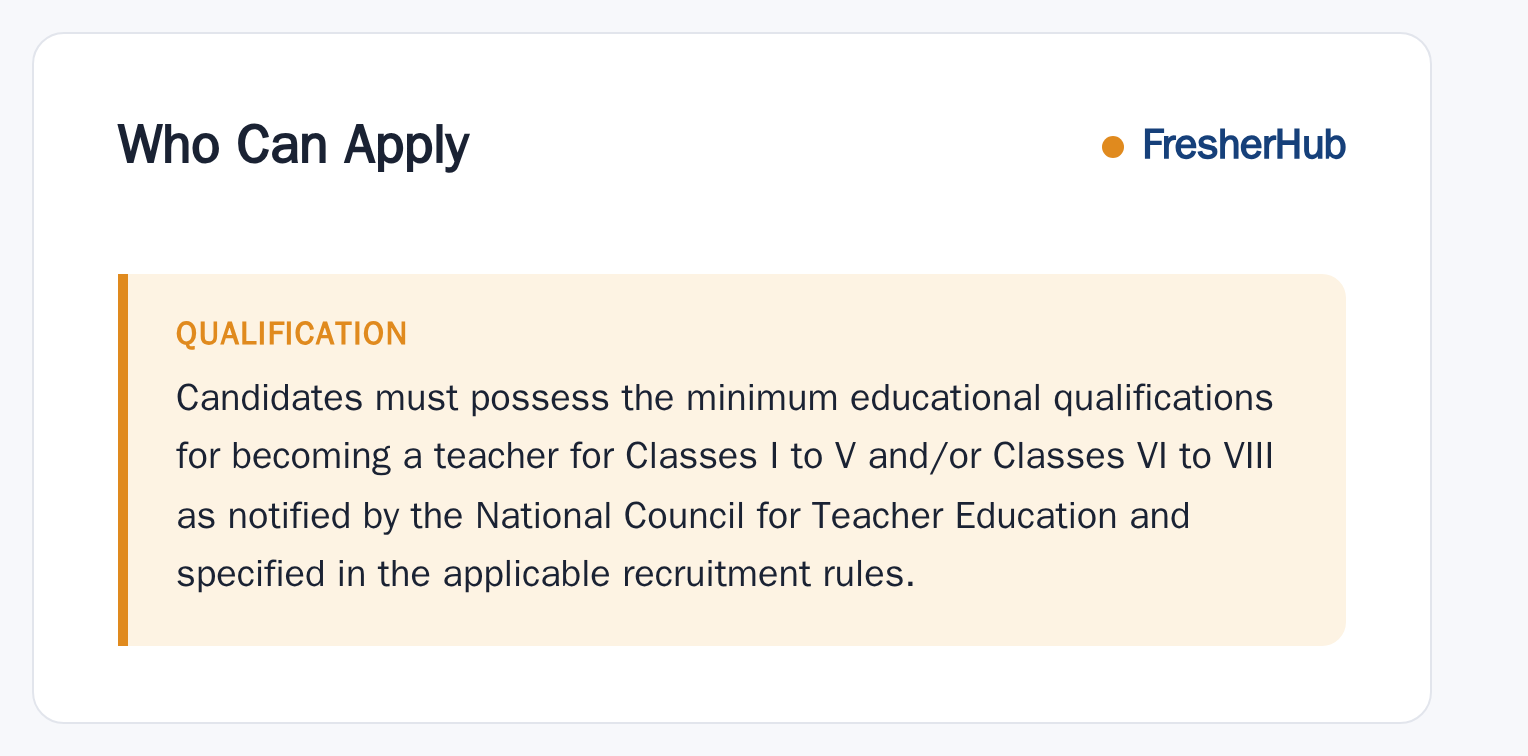
You must have the minimum education needed to become a teacher for Classes I to V and/or Classes VI to VIII.
The qualification follows National Council for Teacher Education rules and the applicable recruitment rules.
Reserved categories, including SC, ST, OBC, and Differently-abled candidates, may receive up to 5% relaxation in qualifying marks.
Educational Qualification
Candidates must possess the minimum educational qualifications for becoming a teacher for Classes I to V and/or Classes VI to VIII as notified by the National Council for Teacher Education and specified in the applicable recruitment rules.
Relaxation up to 5% in qualifying marks in the minimum educational qualification is allowed for reserved categories such as SC/ST, OBC and Differently-abled candidates.
Exam Pattern
Paper-I
| Section | Questions | Marks | Duration |
|---|---|---|---|
| Child Development and Pedagogy | 30 | 30 | — |
| Mathematics | 30 | 30 | — |
| Environmental Studies | 30 | 30 | — |
| Language I | 30 | 30 | — |
| Language II | 30 | 30 | — |
| Total | 150 | 150 |
Paper-II
| Section | Questions | Marks | Duration |
|---|---|---|---|
| Child Development and Pedagogy | 30 | 30 | — |
| Mathematics and Science | 60 | 60 | — |
| Social Studies/Social Science | 60 | 60 | — |
| Language I | 30 | 30 | — |
| Language II | 30 | 30 | — |
| Total | 210 | 210 |
Selection Process
- Paper-I (Central Teacher Eligibility Test)
- Paper-II (Central Teacher Eligibility Test)
Syllabus
| Subject | Topics |
|---|---|
| Child Development and Pedagogy | Child Development, Concept of Inclusive education and understanding children with special needs, Learning and Pedagogy |
| Mathematics | Geometry, Shapes & Spatial Understanding, Solids around Us, Numbers, Addition and Subtraction, Multiplication, Division, Measurement, Weight, Time, Volume, Data Handling, Patterns, Money, Nature of Mathematics/Logical thinking, Place of Mathematics in Curriculum, Language of Mathematics, Community Mathematics, Evaluation through formal and informal methods, Problems of Teaching, Error analysis and related aspects of learning and teaching, Diagnostic and Remedial Teaching |
| Environmental Studies | Family and Friends, Food, Shelter, Water, Travel, Things We Make and Do, Concept and scope of EVS, Significance of EVS, integrated EVS, Environmental Studies & Environmental Education, Learning Principles, Scope & relation to Science & Social Science, Approaches of presenting concepts, Activities, Experimentation/Practical Work, Discussion, CCE, Teaching material/Aids, Problems |
| Language I | Language Comprehension, Pedagogy of Language Development, Learning and acquisition, Principles of language Teaching, Role of listening and speaking, Critical perspective on the role of grammar, Challenges of teaching language in a diverse classroom, Language Skills, Evaluating language comprehension and proficiency, Teaching-learning materials, Remedial Teaching |
| Language II | Comprehension, Pedagogy of Language Development, Learning and acquisition, Principles of language Teaching, Role of listening and speaking, Critical perspective on the role of grammar, Challenges of teaching language in a diverse classroom, Language Skills, Evaluating language comprehension and proficiency, Teaching-learning materials, Remedial Teaching |
| Mathematics and Science | Number System, Algebra, Geometry, Mensuration, Data handling, Nature of Mathematics/Logical thinking, Place of Mathematics in Curriculum, Language of Mathematics, Community Mathematics, Evaluation, Remedial Teaching, Problem of Teaching, Food, Materials, The World of the Living, Moving Things People and Ideas, How things work, Natural Phenomena, Natural Resources, Nature & Structure of Sciences, Natural Science/Aims & objectives, Understanding & Appreciating Science, Approaches/Integrated Approach, Observation/Experiment/Discovery, Innovation, Text Material/Aids, Evaluation, Problems, Remedial Teaching |
| Social Studies/Social Sciences | History, Geography, Social and Political Life, Concept & Nature of Social Science/Social Studies, Class Room Processes, activities and discourse, Developing Critical thinking, Enquiry/Empirical Evidence, Problems of teaching Social Science/Social Studies, Sources- Primary & Secondary, Projects Work, Evaluation |
Admit Card, Exam Date, Result and Answer Key
- Admit Card
- Two Days before the day of examination — full details
- Exam Date
- 06 Sept 2026 — full details
- Result
- By the end of OCTOBER, 2026 (TENTATIVELY) — full details
- Answer Key
- CBSE has not announced a date yet. This page updates the day the notice does.
Key Numbers
| What | As stated in the notification |
|---|---|
| number of papers | two papers |
| questions in each paper | 150 MCQs |
| marks in each paper | 150 Marks |
| qualifying marks | 60% |
| compensatory time for eligible candidates with benchmark disabilities | 50 minutes |
| answer key challenge fee | Rs.1000/- per question |
More jobs like this
Related recruitments
Frequently Asked Questions
What is the last date to apply for CTET September 2026?
The extended last date for online application was 1 September 2026.
When is the CTET September 2026 examination?
The examination is scheduled for 6 September 2026. An additional possible date is 5 September 2026.
What is the CTET application fee?
The fee is Rs.1000 or Rs.1200 for General/OBC (NCL), and Rs.500 or Rs.600 for SC/ST/Differently Abled Person categories.
How many questions are in each CTET paper?
Each paper has 150 multiple-choice questions and 150 marks.
Is there negative marking in CTET September 2026?
No. There is no negative marking.
When will the CTET September 2026 result be declared?
The result is expected by the end of October 2026, tentatively.
Is there a vacancy count for CTET September 2026?
The provided data does not give a total or post-wise vacancy count.
How we know this
Every date, vacancy count, fee and age limit above is transcribed from the recruiting body's own notification and checked back against that document before it is published. A figure FresherHub cannot find in the source is left off the page rather than estimated. How we verify every page.
- 8 official links checked — 8 working.
- Last checked against the source on 29 Aug 2026 — the day this recruitment last moved, not the day this page was last rebuilt.
Documents this page was read from
- Official notice — cdnbbsr.s3waas.gov.inGovernment hostRead 29 Aug 2026
Found something wrong on this page? Tell us — corrections are made against the official document and the change is added to the update history above. For anything you are about to act on, always confirm on the department's own website first.